Spring at Specialty

Rick Knoll of Knoll farm is sending us some wonderful cardoons, green garlic, stinging nettles, rapini and fava leaves.  We have his first of the season pea tendrils, and they’re exceptional–no woody stems, sweet fresh pea flavor.  Expect to see California-grown Victoria Island Farms asparagus by the weekend, and jumbo asparagus is about a week behind that.  Rhubarb is currently from Michigan, and we will start getting some of the Richter/WA state stuff next week.  Starting to see a limited amount of fava beans.  More goodness on the way next week–stay tuned!

From Knoll Farms

  • Pea Tendrils
  • Cardoons
  • Fava Leaves
  • Green Garlic
  • Mixed Chicories
  • Stinging Nettles
  • Wild Mustard Rapini
  • Mustard Flowers*
By Diegolandia

Worth Your Salt


Quoddy Mist Sea Salt from Maine (Seen Above)

Cook or finish with this salt, or try putting in your salt grinder.  We’ve been experimenting with this salt at home and loving this all-natural, slightly damp sea salt from Maine, especially with seafood.  It’s briny, mineral and kelp qualities do a great job highlighting the same in local fish.  We also think it’s size and crunch make it great to sprinkle on freshly fried food right before serving.  How local is your fish and chips?  How ’bout down to the salt?

Maldon Sea Salt

With it’s well-known pyramid-shaped crystals, is thin, flaky, slightly iodine tasting and a decidedly crisp texture.  This salt has a fresh, straightforward taste and clean finish.  Maldon Smoked Salt is the same salt, only cold-smoked.

Fleur de Sel

On the Ile de Re on the coast of France, the sauniers (salt harvesters) build shallow and wide clay pools.  The seawater comes in and settles, and the sun starts to evaporate the water.  Small crystals start to form a thin crust on top of the water.  This is fleur de sel, and it must be fished out gently with a net (that looks kind of like a pool net) without disturbing the crust and pushing it underwater, or stirring up sediment from the bottom of the salt pool. A bit more challenging than fishing in the fryer for tempura crumbs, it sounds kind of dreamy right now, compared to shoveling snow and scattering whatever is the opposite of fleur de sel all over the front steps.

The Grey “Sel Marin”

Also from the Ile de Re, however, Sel Marin is harvested from the bottom of the salt pool with a rake.  The minerals and sediment in the clay are what gives this coarse grey sea salt it’s characteristic minerality.  Fun facts: coarse grey sea salt is denser than regular kosher or table salt, therefore you get more salt per unit if measured by volume.  Also, because the salt is moist, it doesn’t draw blood away from food–unlike kosher salt, which is designed to draw blood away from food.  This makes grey salt perfect for seasoning proteins, especially things like steak, duck and lamb.  This salt can be used for both cooking and finishing.

Other Available Salt

  • Pink Salt, aka Curing Salt #1
  • Danish Viking Smoked Sea Salt
  • Red Boat Fish Salt
  • “Pure Ocean” Brazilian Rock Salt

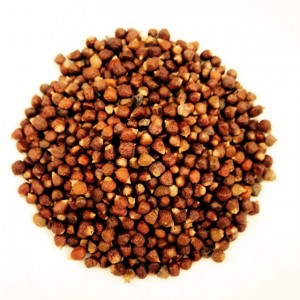
Grains of Paradise

paradiseWho: member of the Zingiberaceae–the Ginger family.
What: a small seed with notes of citrus zest, pepper, cardamom and clove.
Where: originated in West Africa, and spread via caravan trade routes through the Sahara to North Africa and Sicily.  It remains part of the cuisine throughout all these areas.
When: popularity reached it’s height in the western world in the 14th century
How: Historically, used in sausage and beer.  Currently found in some craft beers, aquavit, and gin.  Alton Brown puts it in his apple pie.  Anywhere you’d use pepper or warm baking spices.

By Diegolandia

Interview with Rick Knoll of Knoll Farm

Rick and Kristie Knoll bought a ten-acre farm in Brentwood, CA back in 1979, and have been using their “Tairwa’” approach to everything they farm, including the farm ecosystem itself, ever since. Biodynamic before organic was even cool, these trailblazers out in California grow your incredible green garlic, fava leaves, pea greens, stinging nettles, wild mustard greens, and cardoons. These are coming to us straight from the farm, right after being from the field, very carefully packed, and shipped overnight to us the next day.  Often, these veggies are less than 48 hours out of the ground when you’re getting and serving them.  

We interviewed Rick Knoll to find out more about their practices, what motivates them to do this work, and ask Rick about his hopes for the future of farming.

From their website: It’s not surprising that Rick has a strong interest in biodynamic farming.  He holds a Ph.D. in Organic Chemistry from UC Irvine. Much of what he studied in the early 1970’s laid the foundation for his interest in growing food without chemicals. After working for 6 years as an aerospace-industry chemist, Rick began to turn full time to organic farming, first by studying agroecology at UC Santa Cruz for 3 years, then becoming a full-time farmer.

Specialty Foods Boston: What made you decide to go into farming? What do you want people to know about why you use the farming practices you do?

Rick Knoll: I was recently out of the Navy and found myself getting sick all the time. I had strep throat four times in one year, and just wasn’t getting better. At the same time, I was in graduate school, studying organic chemistry, specifically, how it relates to plants. We were learning that all plants had ways to defend themselves against other plants, animals and threats in their environment. At that time, it was considered anthropomorphic to say that plants have immune systems, but essentially they do. Most drugs found in the medicines that we use originated from plants. In fact, most medicines are basically a manufactured emulation of the chemicals in plants that affect our health.

What I was finding out, in trying to get healthier, was that food was full of antibiotics, hormones and pesticides. It still is, but now it’s also genetically modified. It’s becoming food our bodies can’t recognize anymore; it’s a toxic invasion of our bodies.

You can’t grow anything with blemishes in this country.
Yet blemishes can be an indicator of health in a plant.

There are people who say that organic and non-organic foods aren’t all that different, because the nutrient levels in both are similar. But what’s not taken into account are all the beneficial microorganisms that live in and on our food when it’s grown naturally and not treated with pesticides. We NEED these microorganisms for a healthy immune system and brain function and, therefore, our health and intelligence. Now I’m providing with the food I grow, enhanced immune function to maintain a healthy body. That’s important to me and farmers like me.

SFB: What else do you wish people realized about your produce, vs. the commercial/commodity/mass- or factory-produced version of your product that they may not?

RK: How hard it is to grow a perfect-looking piece of fruit. You can’t grow anything with blemishes in this country. Yet blemishes can be an indicator of health in a plant. A peach with a small blemish may be one that survived a particular peach disease, rather than something grown in a sterile environment that has no resistance. The peach variety that survived is a healthier peach for us and for the environment.

SFB: What are your hopes for the future of farming?

RK: An end to genetic engineering, pesticides, herbicides, and to learn how to grow food ecologically. The more love you put into it, the more you get out of it. These non-ecological technologies are perverse to our health. You can’t expect to genetically engineer foods that have never been seen before, have never been grown before, and expect your body to just deal with it. I think that it’s the root cause of a lot of disease today.

I’d also like to see more young farmers. I don’t see that many; and I think it’s because it’s hard work to grow food. I’ve seen kids come and say they want to farm, but they just don’t want to work that hard. They’d rather be on their iPad. Typing on your iPad is the opposite of farming.

SFB: What is the most satisfying part of what you do?

RK: When we’re at the farmer’s market, and I see a young mother with a child come by–and the kid grabs a piece of fruit and shoves it in his mouth. And the mother yells at him and says “you don’t like that!!” but he does, and eats it anyway.

I love seeing someone bite into one of my peaches or plums and end up with the juice running down their hands and chin. Then their face lights up with a smile as their body recognizes REAL food!! That makes my day!

Rick’s wife and partner Kristie Knoll is a total badass too. Check her out in this article from the SF Gate, where she talks about why they decided not to use the word organic: “”I felt like the feds were going to be lowering the bar,” says Kristie Knoll, 57, a petite, voluble woman with close-cropped hair. “That blew me away. You don’t ever lower the bar. That’s not how you achieve greatness.”

All we can say is…oui, Chef.


The Fifth Taste

Wikipedia lists at least 58 distinct umami enhancers.  We’ve got at least half of them on hand, and a line on the rest.  If you’re looking for the cliff notes on how to boost flavor in any situation, look no further.

Red Boat Products

Not all fish sauce is created equal.  The folks at Red Boat wanted to make a high-quality fish sauce, so they set about finding the best anchovy for the job–ca com, or the black anchovy, wild-caught off of the island of Phu Quoc, Vietnam.  They pack them with sea salt, within a day of catching them, and age them in the traditional way: slow fermentation in mango wood barrels, for a year.  The fish is pressed, the liquid is drawn off, and the fish sauce is ready to bottle.  The 40 N on the label indicates the amount of nitrogen per liter of fish sauce, and that indicates protein levels.  This is significant to Red Boat, because they believe the best fish sauces have a designation of 30N or higher.

BLiS is a collaboration between the folks at BLiS and Red Boat, offering a bourbon-barrel aged version of their fish sauce, in a 200ml bottle.  This sauce, more meant for finishing a dish or directly dressing raw fish, rather than mixed into a sauce, is a bit smoky, and has hints of bourbon-like sweetness, with vanilla, wood and orange peel undertones.  See also Colatura for other ideas on how you can use this higher-end, more concentrated and more complex fish sauce.

Red Boat’s latest offering–a very cool new product–is their fish salt.  These are the salt crystals that form on the bottom of the mango-wood barrels in which the fish sauce is aged.  Here, umami meets salt, and using this salt to season fish (directly, or via brine) is one natural use.  What are yours?  We’d love to know, so tag us on Twitter or on Instagram with your fish salt innovations.

We’re all made of fish sauce
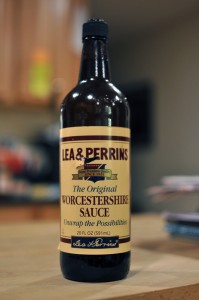
Worcestshire SauceWorcestershire sauce, made in Britain since 1837, contains white vinegar ( in America–in Britain, it contains malt vinegar instead), molasses, sugar, salt, anchovies, tamarind, onion, garlic, and good ol’ “natural flavorings,” which likely include clove, lemon, pickles, and peppers. This fish sauce, brought to you by colonialism, has cousins all over the globe.

Here are a few:

Japanese worcestershire sauce, also known as tonkatsu sauce,  incorporates dried fruits such as apples and tomatoes.  Tonkatsu has a lot in common, then, with  A1, HP Sauce, Heinz 57, Branston, and the whole class of British “brown sauces.”  So next time you run out of tonkatsu, grab the HP.  See also “Joe Beef Gentlemen’s Sauce” mainly because it’s awesome.

You’ve probably heard of kecap manis, or Indonesian sweet soy sauce.  In Indonesia, they worcestershire call it “kecap ingriss,” meaning “English sauce.”  The Indonesian word “kecap” is where we get our word ketchup, which used to be a catch-all word referring to fermented sauces.

In fact, ketchup used to be made from almost anything but tomatoes–oysters, mussels, mushrooms, soy, and walnuts were a few popular bases.  The original meaning of “kecap” meant “the brine of pickled fish.”  The tomato didn’t become a popular ketchup ingredient until the 19th century, thanks in part to the Heinz company.  Old-school tomato ketchup used to be a thin liquid.  It’s current thickness is a result of more tomatoes (that’s what the “fancy” on the label refers to–higher tomato content) as well riper tomatoes that contain more pectin, and last but not least, xanthan gum–which is what allows the Heinz gang to get the exact thickness they want and seem to think is appealing.

Garum (see also, liquamen) was the fish sauce of ancient Greece and Rome. Today Colatura, made in the fishing village of Cetara, on the Amalfi coast, is made from fish packed with sea salt and fermented in chestnut wood barrels.  It is the modern version of garum that lives on in the cuisine of Southern Italy.  Check out BLiS bourbon-barrel aged fish sauce as an alternative, by way of Vietnam, by way of the American south, for a finishing fish sauce that’s a true original.

  • Anchovy: salted white, oil-packed brown, or oil-packed white boquerones
  • Bacon: Nueske, Niman Ranch
  • Beets: red, candy, gold, large and baby
  • Bottarga: salted, cured tuna roe for shaving
  • Capers: regular or wild salted
  • Douchi: aka fermented black beans–whole fermented soybeans before they are made into sauce.  Rustic, earthy, salty and briny, classically paired with clams or beef
  • Edamame, aka soybeans, frozen: in or out of shell
  • Fish Sauce: Red Boat, Blis Bourbon-Barrel Aged, 3 Crabs
  • Fish Salt: Red Boat, see above for details
  • Garlic, Black: peeled and unpeeled fermented garlic, which takes on a sweet quality not unlike roasted garlic, but with a lot more funk
  • Gochujang: Korean chili paste made from fermented soybeans, gochugaru (korean chili flake), glutinous rice, and salt this kicks the ass of sriracha in terms of adding more than just heat to something.
  • Guanciale, La Quercia
  • Ham, Dry-Cured: Redondo jamon serrano, Fermin Iberico ham, La Quercia prosciutto & speck
  • Lardo, La Quercia
  • Katsuobushi: dried, smoked and fermented bonito flakes, a key ingredient in dashi
  • Kimchi: korean fermented pickled vegetables
  • Kombu: a variety of dried seaweed, and a key ingredient in dashi
  • Miso: soybeans fermented with koji and either rice, barley or wheat, in paste form: red (aka), white (shiro), or yellow (awase, meaning “mixed” miso)
  • MSG: monosodium glutamate, in powder form, derived from corn
  • Mushrooms, Dried: esp shiitake, porcini, porcini powder
  • Mushrooms, Fresh: esp honshimeji, enoki, king oyster, shiitake
  • Nori: dried seaweed sheets to wrap sushi or toast and use as a condiment (such as furikake), to garnish ramen, etc.
  • Pancetta, La Quercia
  • Parmesan Reggiano (and other umami-rich hard cheeses…i.e;aged gouda pradera, vella dry jack, grana padano)
  • Roquefort (plus an extensive collection of local blues)
  • Sausage: Chinese, Fra Mani, Olympic
  • Scallops, Dried: one of the main components in XO sauce, the dried ham of the fish world
  • Shrimp, Dried: not only a feature of Asian cuisine~also found in Creole, African, Indian, Mexican and Brazilian dishes
  • Shrimp, Paste (also crab) the backbone of many, many Southeast Asian and Southern Chinese dishes, made from dried fermented shrimp and salt, pressed into a block
  • Soy Sauce: aged shoyu (artisanal), shiro (white), kikkoman, kecap manis, and many others
  • Sweet Potatoes
  • Tomatoes: fresh, paste, roasted oil-packed,  San Marzano, Sundried
  • Worcestershire Sauce: see below
  • XO Sauce: regular and extra hot.  This dried seafood sauce, which originated in Hong Kong, is made from  dried scallop, dried shrimp, red chili, Jinhua ham, and garlic.

Not a sauce nor paste
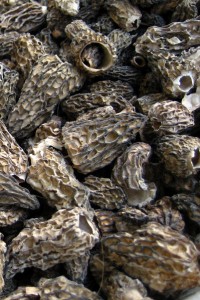
driedmorel-cc-jeremykeithShiitakes, Porcinis, Morels, Black Trumpets, or a mix of them all are available by the pound.  Steeped in hot water and turned into a broth with a little miso, added to chicken or vegetable stock to enhance, powdered and rubbed into steaks, roasted chicken, scallops,or tossed into a braise–anywhere else you want to turn up the volume on savory. These should be a pantry staple.  Dried porcini powder is also available.

Parmesan cheese has one of the highest glutamate levels naturally occurring in any food.  Beyond all the cool things you can do with parmesan itself, the rind is an effective flavor enhancer, and a good candidate for tossing into tomato sauce, stocks, heck, y’all can even toss ’em into ramen broth. You can also grill the (non-waxy) rinds until they’re melty, and slather it on bread for a midnight chef snack.

Photos by Jeremy Keith and Peter Baron.

By Diegolandia

Killer Beans for every occasion

Everything Below is in 10 lb units, except where indicated.

Beans

  • Black Turtle
  • Calypso
  • Cannellini
  • Coco (500 g)
  • Corona (1 lb)
  • Cranberry, aka Borlotti
  • Eye-of-the-Goat
  • Flageolet
  • Garbanzo, a.k.a. Chickpeas
  • Garbanzo, Black
  • Jacob’s Cattle, a.k.a. Trout
  • Lima, Giant Peruvian
  • Marrow
  • Navy
  • Rice
  • Scarlet Runner
  • Tarbais (11 lb)

Lentils

  • Black Beluga
  • Green French
  • Green Lentils, A.O.C., du Puy, FR (500 g)
  • Ivory, White
  • Red Chief

Corn

  • Cornmeal, Red Flint, Maine Organic (2 lb)
  • Cornmeal, White, Maine Organic (aka Jonnycake Meal) (5 lb)
  • Cornmeal, Yellow, Maine Organic (5 lb)
  • Cornmeal, “La Venezolana,” Precooked (1 lb)
  • Polenta, Coarse Yellow
  • Polenta, Fine Yellow
  • Polenta, Fine White

Grains

  • Amaranth
  • Barley, Pearl
  • Barley, Black
  • Buckwheat Groats
  • Couscous, Semolina
  • Couscous, Sardinian Toasted, aka Fregola
  • Couscous, Israeli (5 lb)
  • Couscous, “M’hamsa,” Hand-rolled Semolina (500 g)
  • Couscous, Spelt (500 g)
  • Couscous, Barley (500 g)
  • Farro, D.O.P., Abruzzo, IT
  • Flax Seed
  • Kasha
  • Millet
  • Quinoa, White, Red or Black
  • Teff
  • Wheatberries

Rice

  • Basmati (10 lb)
  • Black Chinese
  • Calasparra
  • Carnaroli
  • Jasmine (25 lb)
  • Purple Sticky
  • Red Himalayan
  • Sushi (15 lb)
  • Vialone Nano (11 lb)

Flours

  • Almond Meal (5 lb)
  • Bread, Whole Wheat, Organic, NY (2lb)
  • Buckwheat
  • Chestnut, Roasted (5 lb)
  • Chickpea
  • Rye, Organic, NY (2lb)
  • Semolina
  • Spelt, Organic, NY (2lb)

Knoll Farm Cardoons are here.

Some people cook them in a blanc, and some a la barigoule.  They could then move on to become the star of a gratin {perhaps with some La Quercia Speck, or Niman Jamon Royale}, part of a winter salad, drenched with bagna cauda, join an antipasto or charcuterie plate, spend some time with corona beans and octopus charred with piment d’espelette, or get cut into batons, battered in chickpea flour, and fried.  A great talking point at the table, this unusual member of the thistle family has an interesting history: as a form of vegetable (non-animal) rennet, used to make some unique and unusual cheeses that tend to be very runny.  Check out this article on thistle-based cheeses here.

2014-12-26 11.38.50What do you guys have downstairs that’s awesome right now?

Knoll Farm Rapini is now in.  This is like using just the leaves of the brocolli rabe, and the rapini Rick Knoll grows has an incredibly fresh and spicy flavor profile.  We’ve spotted it being used in everything from braised lamb garganelli with pecorino and chilis, to a rough pesto with fra mani salami on an Iggy’s ficelle.  What are you doing with it?  Tag us on instagram with a picture of your dish @specialtyfoodsboston.

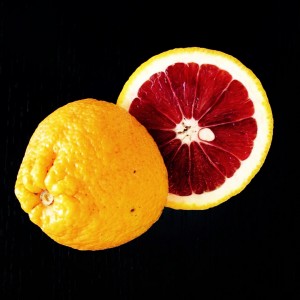
Blood Oranges, Kumquats, Meyer Lemons, Pumellos and Cara Cara Pink Navel Oranges (pictured above) are all going strong.  More heirloom citrus varities coming soon~stay tuned

Last of the cranberries and quince are in the house for the season, so get your last batch of membrillo or jam made.

By Diegolandia